How to Prepare Your Plumbing for Winter Freezes and Emergencies
Winter can be tough on plumbing. One cold snap, and pipes can freeze, burst, or leave you scrambling for emergency plumbing help. For homeowners and small business owners, a plumbing emergency in winter isn’t just inconvenient—it can mean costly repairs, water damage, and lost time.
At Schaubs Plumbing, we understand how stressful it feels when you’re caught off guard. With decades of hands-on experience and 24/7 emergency plumbing service, we know what it takes to keep your pipes safe, your water running, and your peace of mind intact—even when the temperature drops.
Why Winter Poses Risks to Plumbing ❄️
When the mercury drops, plumbing systems face a unique set of challenges. Frozen pipes top the list. Water expands as it freezes, turning a simple pipe into a ticking time bomb. If the pressure builds, pipes can crack or burst, flooding basements, crawlspaces, or offices in minutes.
Other common winter plumbing issues include:
- Water heater breakdowns from overuse or cold intake water
- Leaky outdoor faucets and hose bibbs
- Sewer line backups due to frozen ground or tree root intrusion
- Low water pressure, especially in older buildings
- Sump pump failures during snowmelt
Think of your plumbing like a garden hose left out in the cold. Water inside freezes, expands, and splits the hose. The same thing happens inside your home’s pipes—except the damage is hidden behind walls and floors.
Preventative Maintenance for Cold Weather
The best emergency is the one you never have. A little preparation goes a long way toward keeping your plumbing safe all winter. Here’s how to get started.
Insulating and Protecting Pipes
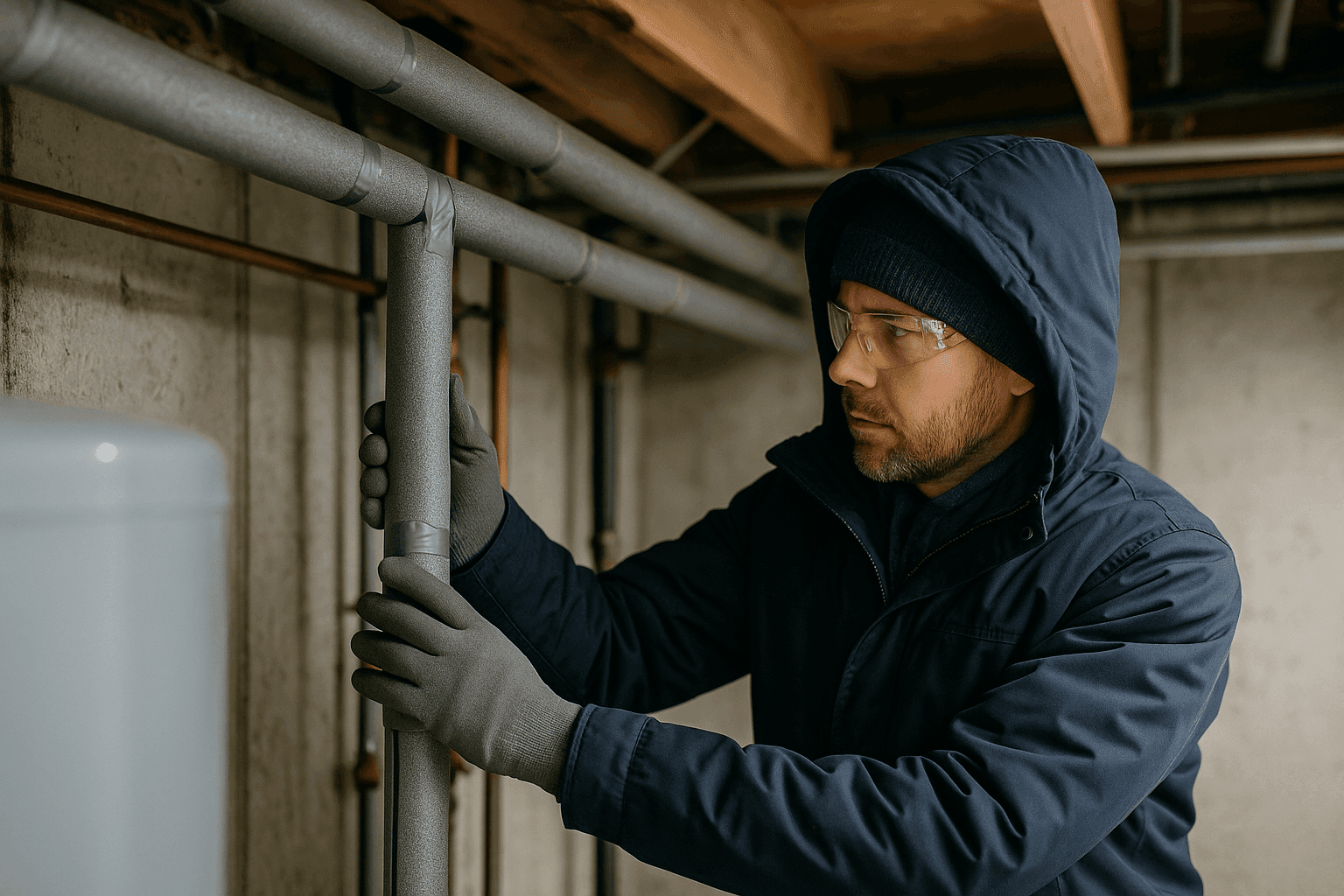
Insulation is your first line of defense. Start with pipes in unheated spaces—basements, attics, garages, and crawlspaces. Use foam pipe sleeves or fiberglass wrap. Don’t forget elbows, joints, and valves. Even a towel or newspaper can help in a pinch.
- Seal gaps and cracks in walls near pipes with caulk or expanding foam.
- Open cabinet doors under sinks to let warm air circulate around pipes.
- Keep the thermostat set above 55°F, even if you’re away.
- Disconnect and drain garden hoses. Shut off and drain outdoor faucets (use a frost-free spigot if possible).
According to the International Association of Certified Home Inspectors (InterNACHI), pipe insulation can reduce the risk of freezing by up to 80%.
Preparing Water Heaters for Winter
Your water heater works overtime in winter. Cold water entering the tank forces it to heat more—and work harder.
- Flush your water heater to remove sediment buildup, which can reduce efficiency.
- Check the temperature setting. 120°F is usually ideal for comfort and energy savings.
- Inspect for leaks, rust, or corrosion around the tank and connections.
- If you have a tankless system, insulate exposed pipes leading to and from the unit.
If your heater is older or you notice strange noises, consider scheduling a professional inspection before the first freeze.
Emergency Steps if Pipes Freeze or Burst
Even with preparation, emergencies happen. If you suspect a frozen pipe:
- Turn off the main water supply immediately to prevent flooding.
- Open faucets to relieve pressure and allow melting ice to drain.
- Gently warm the frozen section with a hair dryer or heating pad—never use an open flame.
- If the pipe bursts, keep the water off and call emergency plumbing services right away.
Quick action can mean the difference between a minor repair and a major disaster.
When to Call a Professional
Not every plumbing issue can be solved with a wrench and some elbow grease. Call Schaubs Plumbing if:
- You can’t locate the frozen section.
- There’s visible water damage or flooding.
- Pipes are inaccessible or behind walls.
- You suspect a sewer line or gas line problem.
- Your water heater stops working, leaks, or makes loud banging sounds.
Our team is available around the clock for emergency plumbing calls. We’re equipped to handle everything from leak detection and pipe repair to sump pump failures and backflow prevention.
Detecting Leaks Early During Cold Weather
Leaks often start small—just a drip or a trickle. But in winter, even a tiny leak can grow fast as pipes contract and expand.
Watch for these warning signs:
- Unexplained increases in your water bill
- Damp spots on walls, ceilings, or floors
- Musty odors or mold growth
- The sound of running water when all fixtures are off
If you notice any of these, don’t wait. Early detection is key to preventing bigger problems.
Emergency Plumbing Readiness: Be Prepared
Emergencies don’t keep business hours. Here’s a simple winter plumbing checklist to stay ready:
- Know where your main water shut-off valve is located.
- Keep contact information for emergency plumbing services handy.
- Store a flashlight, towels, and buckets in an easy-to-reach spot.
- Check your sump pump and battery backup before heavy snow or rain.
- Schedule a professional inspection if your plumbing is older or has a history of problems.
Frequently Asked Questions
How can I tell if my pipes are frozen?
You might notice little or no water coming from faucets, or hear strange noises in the walls. If you suspect a frozen pipe, turn off the main water supply and call for help.
What should I do if a pipe bursts?
Immediately shut off the main water valve, open nearby faucets to drain the system, and call emergency plumbing services. Move valuables away from the affected area.
Do I need to winterize outdoor plumbing?
Yes. Disconnect hoses, shut off outdoor faucets, and drain any remaining water. This prevents freezing and bursting.
How often should I have my plumbing inspected?
At least once a year, especially before winter. Professional inspections can catch small problems before they turn into emergencies.
Special Considerations for Homeowners and Small Business Owners
For homeowners, frozen pipes can mean ruined floors, walls, and cherished belongings. For small business owners, plumbing emergencies can disrupt operations, damage inventory, and affect customer trust.
Take extra care if:
- You own an older property with original plumbing.
- Your building sits on a slab or has crawlspace plumbing.
- You’ve experienced leaks, clogs, or water heater issues in the past.
Regular preventative maintenance, seasonal inspections, and knowing who to call in an emergency can save money, stress, and time.
The Value of Professional Help
Some winter plumbing tasks are DIY-friendly, but others require a trained eye. Licensed plumbers follow safety codes (like those from the Uniform Plumbing Code and the International Plumbing Code) and use specialized tools for leak detection, pipe repair, and water heater maintenance.
Attempting complex repairs without experience can lead to more damage, higher costs, and even safety risks. When in doubt, call a pro who’s equipped for 24/7 emergency plumbing response.
Costs and Time Factors
Winter plumbing repairs can range from quick fixes to major projects. Insulating pipes and basic maintenance are affordable and can be done in a few hours. Emergency repairs—like burst pipes or water heater replacements—may take longer and cost more, depending on the extent of the damage and accessibility.
Investing in preventative care is almost always less expensive than dealing with the aftermath of a plumbing emergency.
When It’s an Emergency
If you’re facing flooding, no water, gas smells, or sewage backups, it’s time to act fast. These situations can cause severe property damage and health hazards. Don’t hesitate—call emergency plumbing services right away.
Stay warm, stay safe, and keep your plumbing protected this winter. For fast, reliable emergency plumbing help—day or night—reach out to Schaubs Plumbing.
Call Schaubs Plumbing now — or reach us anytime at 1-877-919-9920 .